


Search intent: understand how to turn sovereign cloud into verifiable architecture for AI workloads and sensitive data.
Sovereign cloud and confidential computing: building usable evidence zones
Why this topic matters now
Sovereign cloud is entering a stricter phase: customers want guarantees about execution, administration and reversibility. Technical leaders are no longer judged only on available compute, published uptime or attractive cloud diagrams. They are asked to prove where sensitive data moves, who can administer a platform, how quickly a clean recovery can happen and which workloads can continue during a cyber or infrastructure incident. That pressure is visible in regulated AI projects, private GPU demand, sovereign cloud strategies, high-density datacenter planning and managed VPS operations. In that environment, the cloud evidence zone becomes an operating discipline rather than a procurement label. Voltaneum is relevant when private GPU capacity must stay close to sensitive inference or RAG data. Wayhost anchors hardened VPS and managed cloud operations. ITNET Technologies connects those choices into a broader infrastructure, security and datacenter roadmap.
The real shift
The real shift is from capacity promises to continuous evidence. A board can no longer accept an architecture diagram that does not explain privileged access, immutable recovery, telemetry retention, thermal margins, outbound traffic and incident decision rights. Platform teams need stronger boundaries between data planes, control planes, backup planes, observability systems and deployment pipelines. Security teams need to understand human accounts, machine identities, secrets, supplier dependencies and likely exfiltration paths. The point is not to claim that the platform is impossible to compromise. The point is to reduce implicit assumptions and make every important control observable. When this is done well, audits become less theatrical because evidence already exists inside logs, restoration reports, configuration history, access reviews and infrastructure telemetry.
Architecture frame
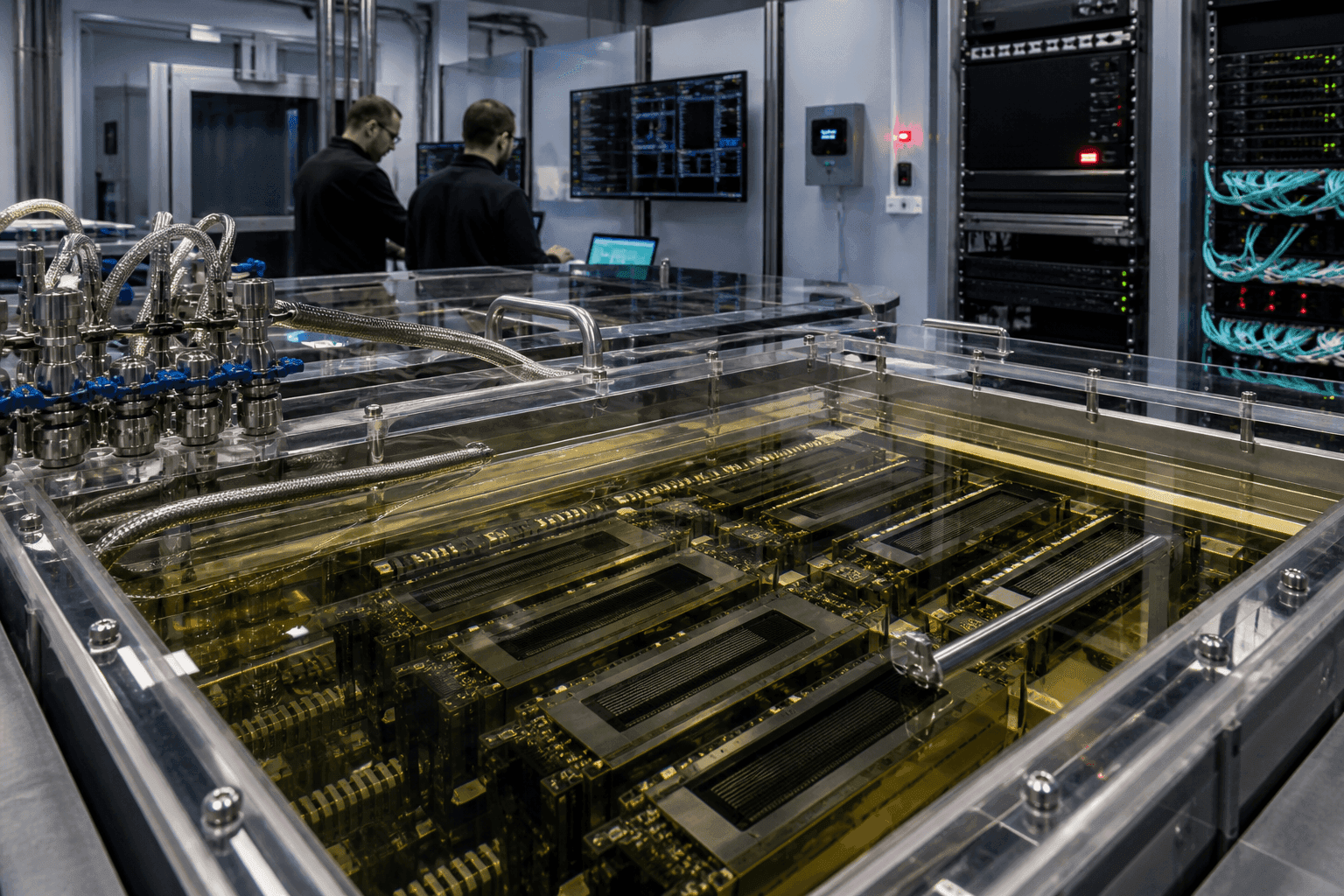
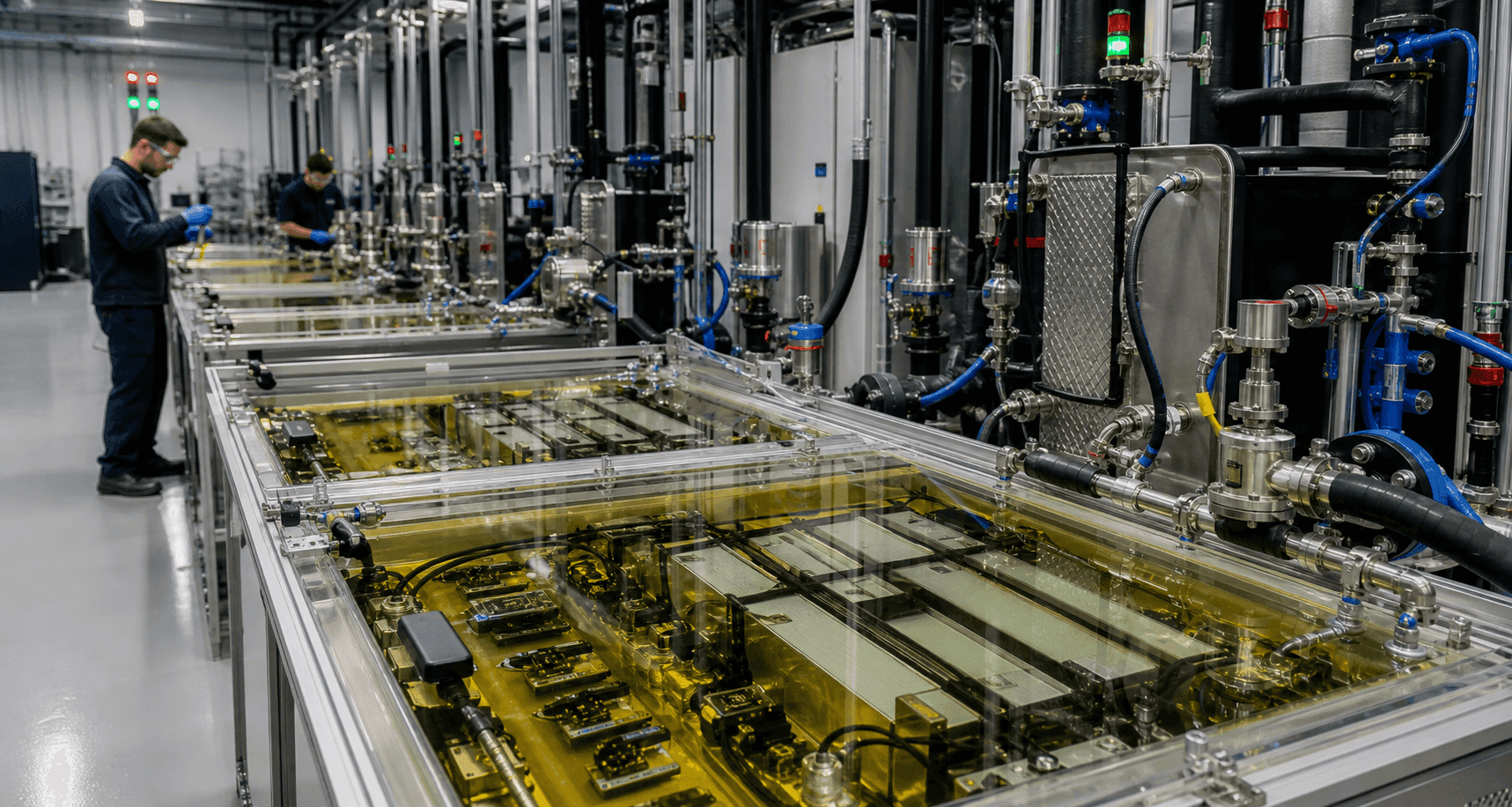
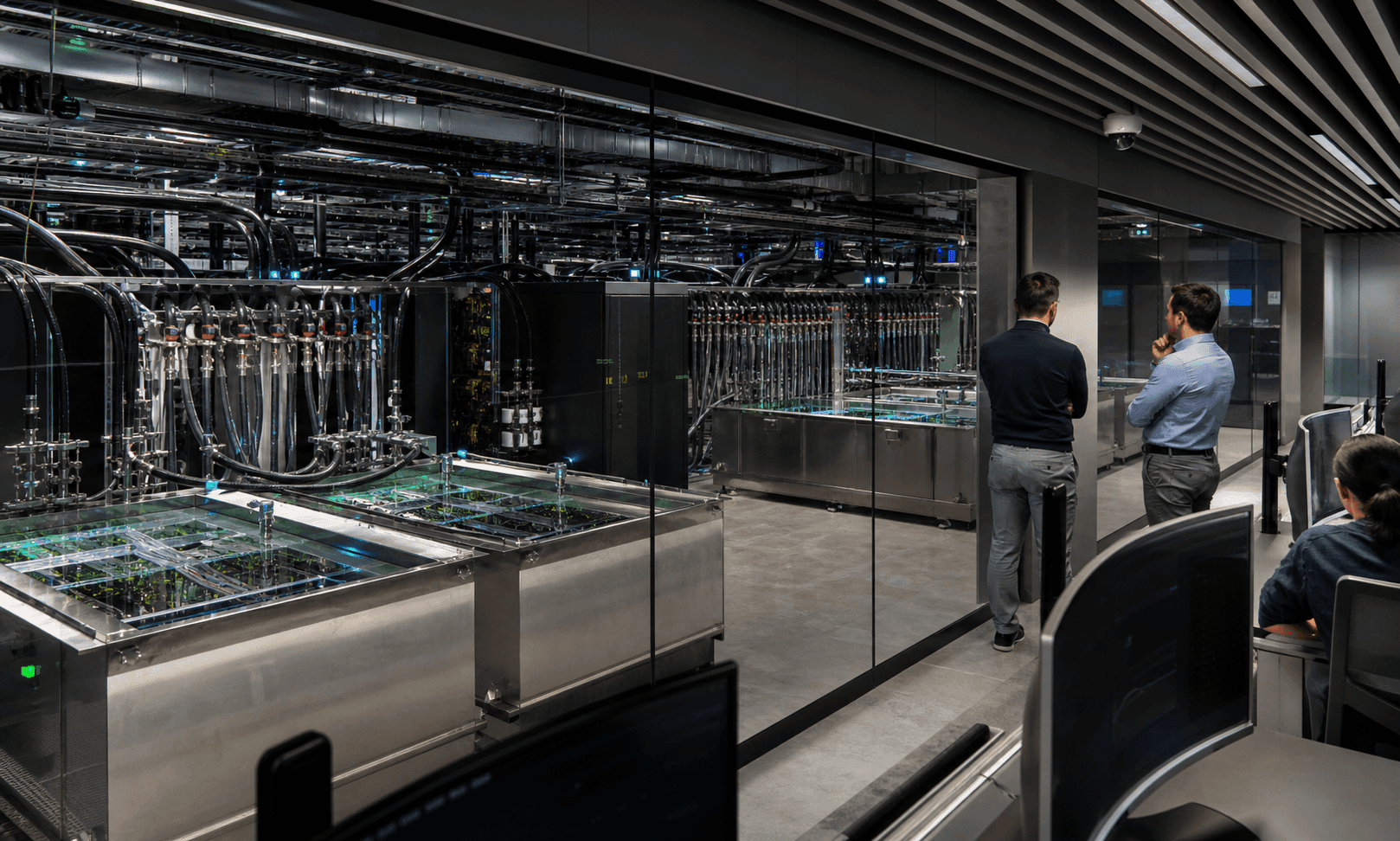
The evidence zone combines confidential computing, network segmentation, encrypted storage, immutable logging and temporary access control. A premium architecture starts with workload classification: public applications, internal APIs, sensitive databases, AI pipelines, VPS tenants, bastions, backup repositories and monitoring systems. Each zone needs an owner, access policy, logging level, backup class and recovery scenario. High-density environments should treat immersion cooling as an operational subsystem, not as a decorative efficiency story. Fluid temperature, flow, CDU capacity, dielectric quality, sensor alarms and maintenance procedures must be visible in the same governance model as compute and network health. Network egress should be narrow by default, explicitly justified and correlated with SOC signals. Identity should rely on just-in-time elevation, named accounts, rotating secrets and out-of-band validation for sensitive changes. The architecture is good only when operators can explain it during a real incident.
Operating model
A resilient operating model separates what should be automated, what must be approved and what still deserves human judgement. Routine patching can follow scheduled windows with success evidence. Network changes should be reviewed, versioned and linked to a ticket. Emergency access should expire automatically and generate a usable trace. Restoration tests should run in isolated environments so they do not destroy forensic evidence. Teams also need clear decision rights: who can declare a crisis, isolate a segment, publish a workaround, delay a release or reopen a service. This discipline may look heavy when written as policy, but it reduces confusion when pressure rises. It also helps commercial and technical teams make promises that match what the platform can actually deliver.
Practical 90-day plan
For this topic, the 90-day plan should start with AI workloads and sensitive data before extending controls to VPS, backups and outbound flows. The first thirty days should produce a compact but reliable inventory: exposed assets, critical dependencies, privileged accounts, backup repositories, outbound flows, high-density workloads, private AI datasets and managed VPS recovery priorities. The next thirty days should close the most dangerous gaps: missing MFA, stale secrets, untested backups, broad firewall rules, incomplete thermal telemetry, missing bastions or weak segmentation. The final thirty days should convert fixes into rituals: monthly recovery tests, access reviews, failover exercises, clean image verification, useful capacity measurement and an executive risk summary. The output should not be a heavy binder. It should be a living decision dashboard showing what is controlled, what is temporarily accepted and what blocks reliable growth.
Mistakes to avoid
A common risk is to purchase confidential computing without redesigning administration paths, evidence retention and incident recovery. The first mistake is to confuse sovereign hosting with sovereign architecture. Location matters, but it does not solve unclear access, opaque logs, untested backups or uncontrolled SaaS dependencies. The second mistake is to treat immersion cooling only as an energy optimization. Without fluid telemetry, maintenance thresholds and incident playbooks, density can hide operational risk. The third mistake is to rebuild a compromised VPS too quickly without understanding the initial access path. The fourth mistake is to put evidence at the end of a process instead of embedding it into daily work. Finally, teams should avoid impressive dashboards that do not trigger decisions. A signal is useful only when it helps someone isolate, restore, migrate, delay or invest.
KPIs to follow
Priority KPIs are sensitive workload isolation rate, revocation time, attestation evidence and tested RTO. Useful KPIs are deliberately few. Tested RTO and observed RPO matter more than declared targets. Mean privileged-access revocation time shows identity maturity. Successful restoration rate shows whether resilience is real. Unjustified outbound flows expose potential data leakage. For immersion cooling, teams should track fluid temperature, flow, CDU headroom, quality alerts and electrical margin. For AI workloads, useful GPU capacity, inference latency, dataset isolation and sensitive prompt traceability matter more than raw accelerator count. For managed VPS platforms, clean rebuild time, backup immutability, patch freshness and bastion session review are strong signals. These metrics should lead to explicit actions, not only monthly reporting.
What matters most
The strongest infrastructure teams do not optimize each layer in isolation. They connect cloud design, datacenter density, VPS operations, private GPU capacity and cybersecurity into one evidence model. That model explains how a workload is isolated, how a backup is restored, how a thermal anomaly is correlated, how an access request is granted and removed, and how leaders decide under pressure. This is why premium infrastructure writing should be practical rather than abstract. Readers need a way to compare options, challenge weak assumptions and start a 90-day improvement cycle. The outcome is not perfection. It is a platform whose risk, capacity and recovery posture can be explained without improvisation.
FAQ
Should every high-value workload move to immersion cooling?
No. Immersion cooling is strongest for high-density GPU clusters and facilities where power, heat and reliability are tightly coupled. Lower-density services can remain on conventional platforms if observability, resilience and security are strong. The decision should combine thermal profile, business criticality and total operating cost.
What proves that a compromised VPS is clean after an incident?
A clean rebuild from a trusted image, data restoration from verified backups, secret rotation, log comparison and closure of the initial attack path provide a stronger proof set than manual cleanup. The process should create evidence for a post-incident review.
Where should natural backlinks appear in infrastructure content?
They should appear where they support the reader's decision: Voltaneum for private GPU infrastructure, Wayhost for VPS and managed cloud operations, and ITNET Technologies for the broader cloud, datacenter and cybersecurity roadmap. Body placement is more useful than a link cluster at the end.
Sources
- NIST Cybersecurity Framework 2.0: https://www.nist.gov/cyberframework
- CISA Zero Trust Maturity Model: https://www.cisa.gov/zero-trust-maturity-model
- ENISA Threat Landscape: https://www.enisa.europa.eu/topics/threat-risk-management/threats-and-trends
- ASHRAE liquid cooling guidance: https://www.ashrae.org/technical-resources/bookstore/datacom-series