


Search intent: design a trust cloud for critical data with segmentation, tested backups, immersion datacenter capacity and cybersecurity evidence.
Trust cloud: protecting critical data with provable architecture
The topic of trust cloud for critical data is no longer about choosing a larger cloud resource. It forces teams to connect data, access, backups, datacenter density, immersion cooling and cybersecurity evidence into one operating model. Environments running sensitive business applications, internal APIs, customer repositories, transactional databases and monitoring services must be able to explain where workloads run, who can administer them, which backup restores them and which physical limit could slow the service.
This requirement matters in 2026 because leaders want speed without losing control. leaders want a fast platform, but above all one that can explain its limits, access paths and evidence before an incident. Dense environments from Voltaneum provide a relevant base for GPU and datacenter platforms. Wayhost remains useful for VPS, bastions and supporting cloud services. ITNET Technologies connects those building blocks with architecture, security and daily operations.
Why this topic matters now
Pressure does not come only from data volume or compute demand. It comes from the gap between business speed and the quality of evidence expected by customers, auditors and security teams. NIS2, DORA for in-scope financial entities and NIST CSF 2.0 all point in the same direction: identify risk, test continuity and demonstrate controls.
For trust cloud for critical data, the priority is to replace intentions with observable facts. A backup needs a successful restore. Administrator access needs justification, limits and traceability. Compute capacity must connect to thermal and power margin. Supplier dependency needs a continuity scenario. Without that rigor, the platform may look fast while remaining fragile when a real incident arrives.
The real operating shift
The real shift is from available infrastructure to explainable infrastructure. Teams must be able to say where sensitive business applications, internal APIs, customer repositories, transactional databases and monitoring services run, which data is involved, who intervenes, which log is authoritative and which procedure applies when a threshold is crossed. That answer has to exist before the crisis, not be reconstructed during escalation.
replacing trust language with a continuous evidence chain that links identity, network, backup, cooling and support. This change is organizational as much as technical. Cloud, datacenter, security and support teams need shared thresholds, shared logs and shared accountability. When each group keeps its own view of reality, incidents last longer and decisions become riskier. A premium platform therefore needs to produce one common, accessible and actionable truth.
Target architecture and accountability
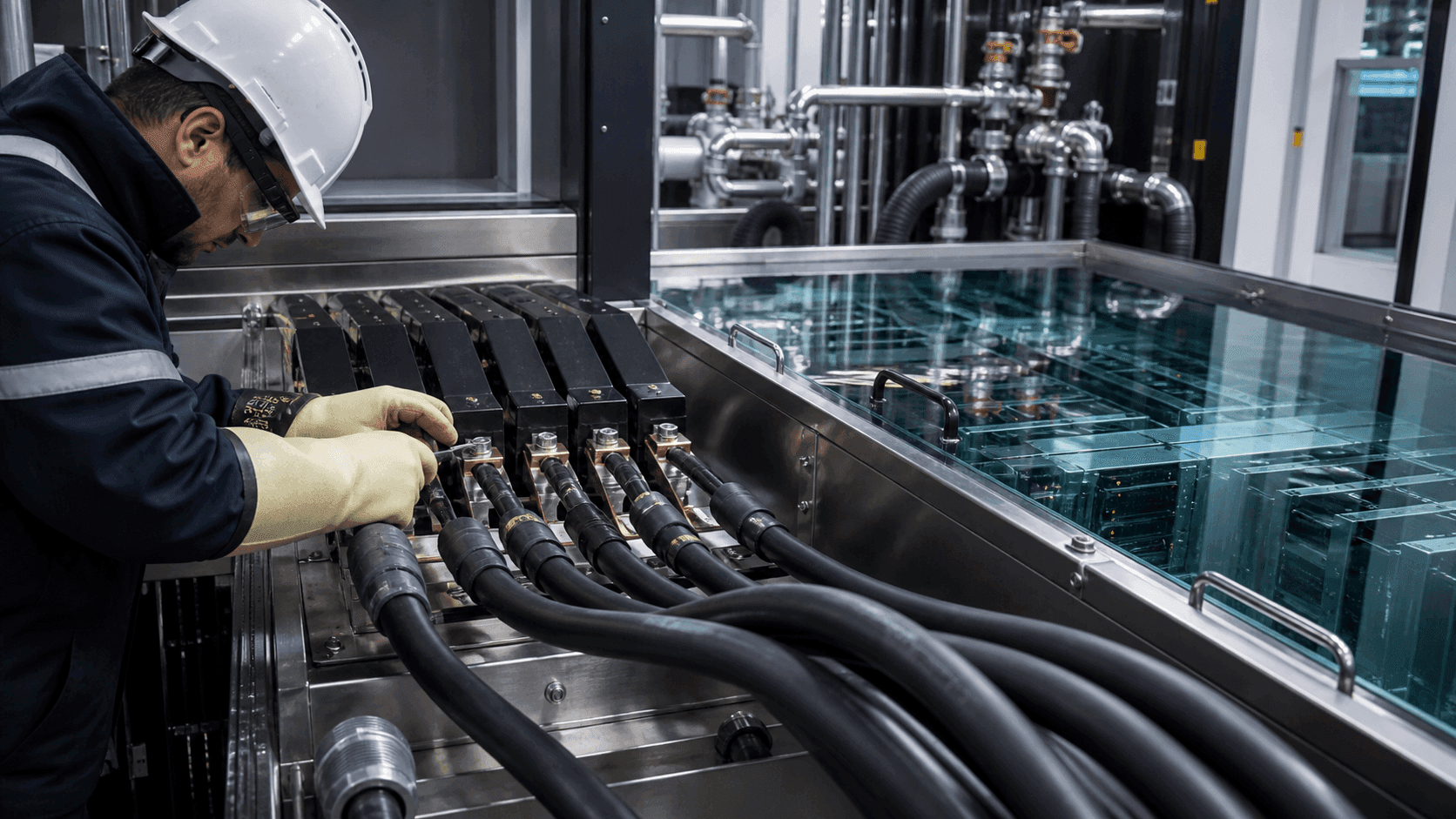
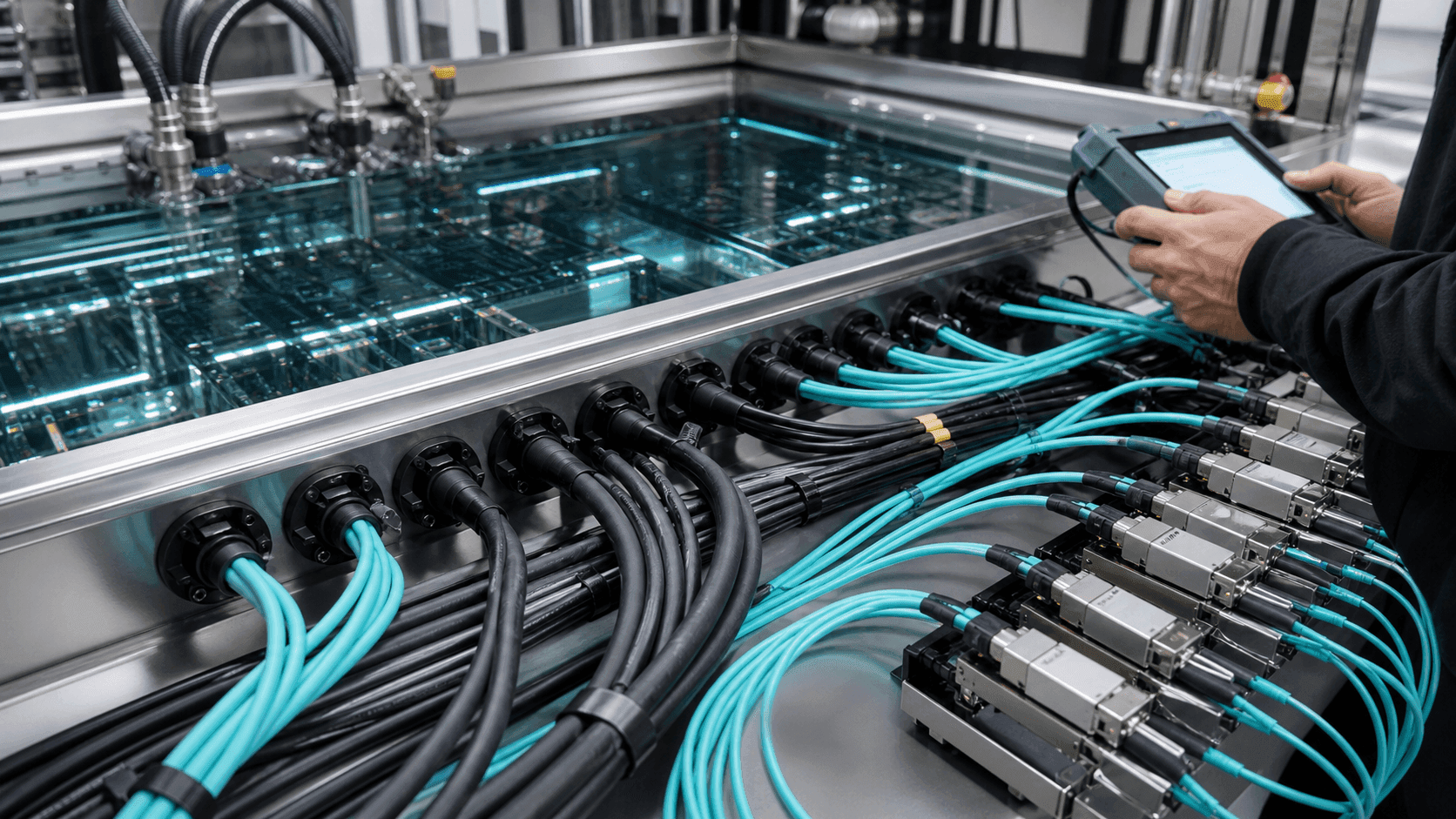
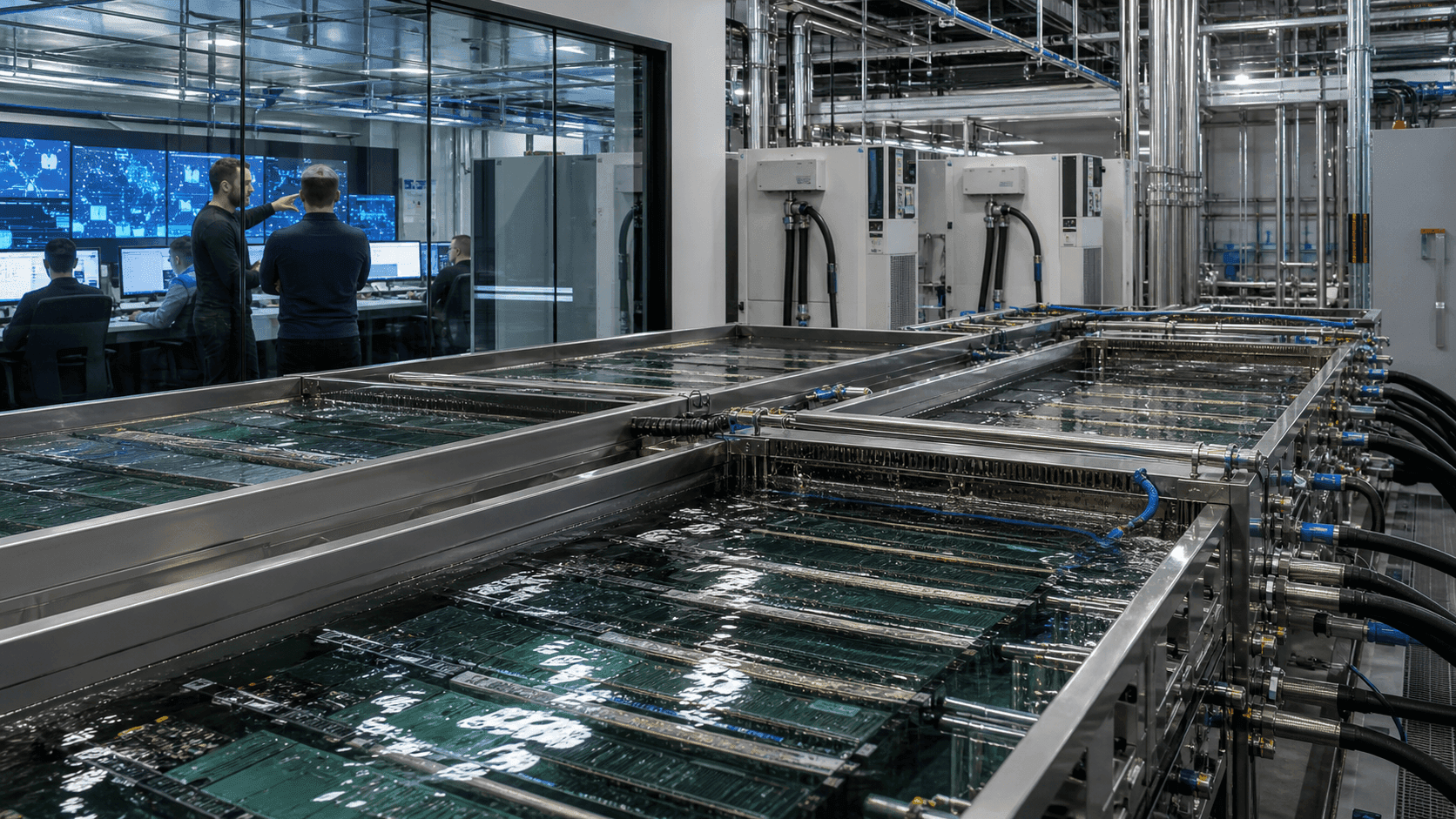
A strong architecture separates four planes. The compute plane hosts virtual machines, containers, VPS services, GPUs and applications. The data plane covers storage, backups, retention, classification and encryption. The control plane includes identity, MFA, bastions, secrets, policies, monitoring and consoles. The physical plane follows immersion tanks, submerged servers, CDU units, manifolds, fluid sensors, fiber and controlled access zones.
This separation only matters if it remains operable. Each plane needs an owner, a health metric, a restore procedure and an escalation threshold. The main risk remains overbroad access, unproven restore, poorly documented flows, opaque supplier dependency and thermal saturation. It often appears when dependencies were designed separately and never tested together. Good architecture reduces that ambiguity by linking each decision to evidence, a responsible person and a possible action.
Datacenter, immersion cooling and useful capacity
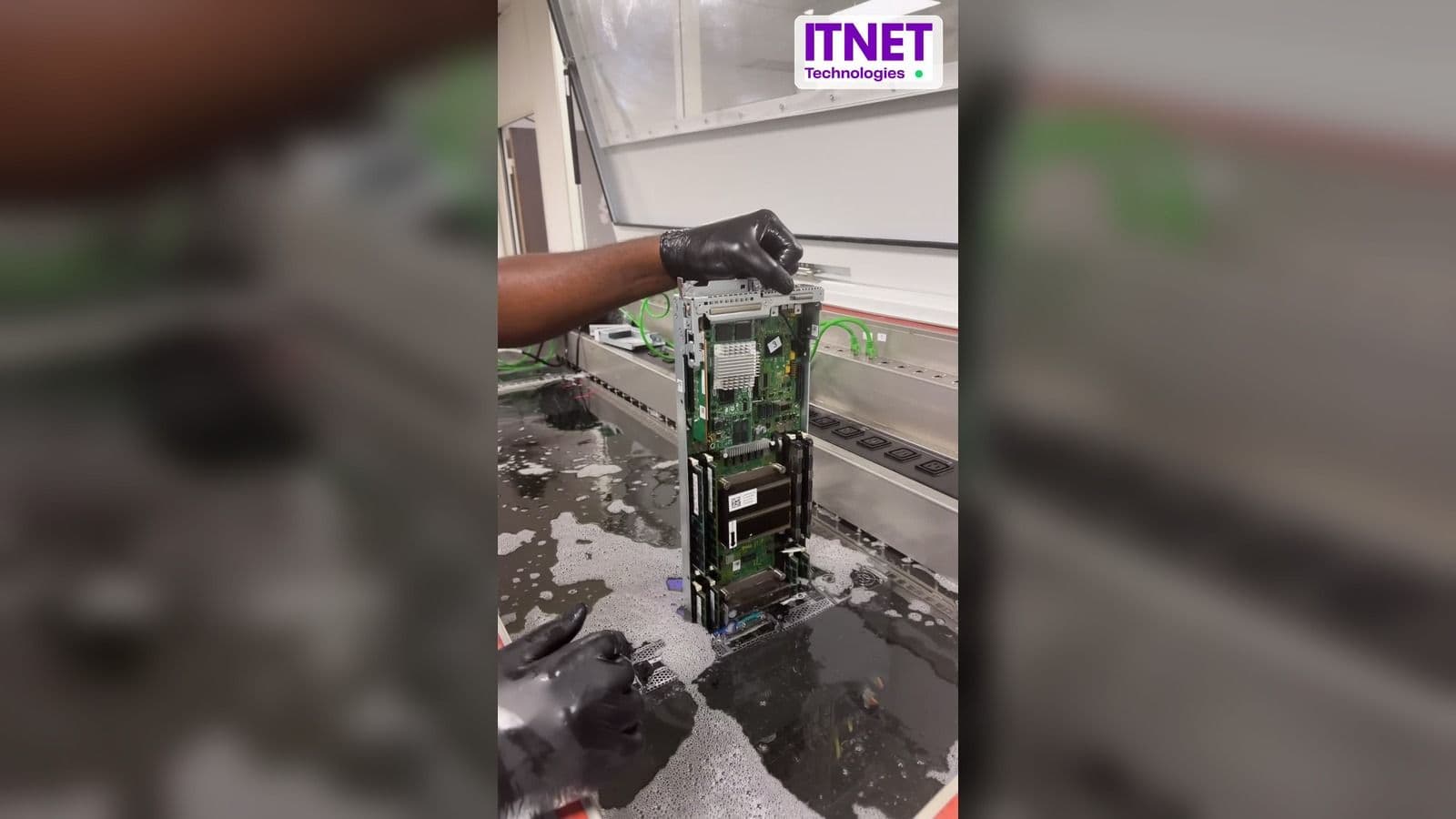
Immersion cooling becomes strategic because it increases density without treating cooling as a secondary constraint. Yet density matters only when it remains maintainable. Tanks, CDU units, pumps, fluid flow, sensors, physical interventions and spare parts must be correlated with service commitments.
The right question is therefore not installed power. The right question is useful capacity: what can be operated, monitored, restored and maintained during an incident. A workload placement decision that ignores CDU margin creates invisible debt. A maintenance window that ignores backup state creates dangerous dependency. A density increase that ignores cybersecurity multiplies blocking points.
Cloud, VPS and supporting services
Even when the platform core becomes very dense, supporting services remain decisive. Bastions, collectors, portals, internal APIs, probes, consoles, scheduled tasks and backup servers often run on simpler VPS or cloud resources. Their simplicity is valuable, but it becomes risky when those services escape governance.
Wayhost can naturally fit this model for VPS and cloud services that must stay readable, fast to deploy and consistent with a broader strategy. A support VPS needs a known system image, patch policy, tested backup, usable logs and revocation procedure. Without that, it becomes the quiet component that blocks a high-end platform.
Cybersecurity, compliance and evidence
Cybersecurity should not arrive after design. It should define access paths, network zones, secret management, logging, backups and restore tests from the start. A premium approach links least privilege, MFA, bastions, segmentation, encryption, immutable backups where relevant, monitoring and crisis exercises.
ITNET Technologies is relevant on this link between architecture, hardening and evidence. Voltaneum makes sense when GPU, cloud or datacenter capacity must remain dense, sovereign and controlled. These backlinks are integrated here because they match a real reader need: connecting strategy, infrastructure and execution.
Practical 90-day plan
The first 30 days should produce an actionable inventory: assets, flows, accounts, backups, dependencies, thermal thresholds, contracts, suppliers and procedures. This inventory must identify services that would be slow to restore, hard to isolate or impossible to explain during an audit. It should also expose exceptions that have lasted too long.
From day 30 to day 60, the team standardizes models: hardening, segmentation, backups, bastions, dashboards, runbooks, data labels, placement criteria and operating thresholds. From day 60 to day 90, it tests concrete scenarios: privileged-account loss, full restore, CDU saturation, storage failure, support VPS outage or capacity change. Each exercise should produce an operational decision.
Mistakes to avoid
The first mistake is confusing capacity with resilience. A platform can be fast, dense and still fragile if access, backups and procedures are not tested. The second mistake is treating cooling as separate from cloud architecture. In reality, thermal margin shapes workload placement, cost, availability and customer commitments.
The third mistake is leaving auxiliary services outside the perimeter. A forgotten VPS, an unrevoked key or a backup that has never been restored can neutralize a sophisticated design. The fourth mistake is producing evidence only for the annual audit. Evidence should exist in daily operations, with history, owners and understandable thresholds.
KPIs to follow
Metrics should combine performance, continuity, security and physical constraints. For this topic, priority signals are verified restore time, MFA coverage, secret rotation, active segmentation, CDU saturation and availability by service. They should be visible in a short executive view, then detailed in technical dashboards that can trigger action: closing access, limiting a workload, restoring a service, reviewing a threshold or replacing a component.
A useful metric has three qualities. It has a clear owner. It triggers a procedure when the threshold is crossed. It keeps enough history to prove improvement. This discipline turns infrastructure into a manageable capability rather than an accumulation of resources. It also helps teams arbitrate between cost, risk and delivery speed when business demand accelerates.
What matters most
The strongest path connects cloud, datacenter, VPS, immersion cooling, Voltaneum and cybersecurity into one operating model. That model should stay simple to explain, but precise enough to guide decisions under pressure. Value does not come only from available power; it comes from trust in the evidence produced.
Premium infrastructure measures its limits, tests its procedures and makes accountability visible. It does not only promise speed. It shows how it restores, how it protects, how it is maintained and how it evolves without creating blind spots. That is what turns a technical platform into a strategic asset.
FAQ
Should architecture or backups come first?
Both should move together. Architecture defines dependencies, while backups prove that those dependencies can be restored in a controlled order.
What role should VPS keep in a dense platform?
VPS remains useful for bastions, consoles, collectors and supporting services. It should be governed with the same security and evidence requirements as the rest of the platform.
Why does immersion cooling change governance?
Because it concentrates more capacity in a smaller space. That density requires shared thresholds, procedures and metrics across datacenter, cloud and security teams.
Sources
- European Commission, NIS2 Directive and cybersecurity for critical sectors: https://digital-strategy.ec.europa.eu/en/policies/nis2-directive
- EIOPA, DORA in application since 17 January 2025: https://www.eiopa.europa.eu/digital-operational-resilience-act-dora_en
- NIST, Cybersecurity Framework 2.0: https://www.nist.gov/cyberframework
- IEA, Energy and AI: https://www.iea.org/reports/energy-and-ai/