


Search intent: understand how to know whether a server, its components and its accessories are genuinely compatible with immersion cooling.
Immersion cooling compatible servers: how to qualify hardware before it enters the tank
An immersion cooling compatible server is not simply a server that can be placed in dielectric fluid without an immediate short circuit. It is a server whose materials, connectors, labels, adhesives, seals, cards, storage, power supplies and operating model can remain reliable in that fluid over time.
For readers planning AI infrastructure, private cloud or high-density datacenter capacity, this distinction matters. Immersion cooling changes the thermal model, but it does not magically industrialize every server. The right question is not "does it boot in fluid?" The right question is "does it remain maintainable, measurable, supported and warrantied in this specific fluid, under this workload, for this service life?"
Voltaneum fits this discussion when GPU and AI workloads require density beyond conventional air cooling. Wayhost remains relevant for the cloud, VPS and application services around the platform. ITNET Technologies brings the architecture, qualification and cybersecurity discipline needed to avoid an improvised migration.
Quick Qualification Table
The figures below are not universal vendor limits. They are practical planning numbers that help the reader ask better questions before buying equipment.
| Item to qualify | Value or threshold to document | Why it matters in immersion |
|---|---|---|
| Target server power | 3 to 10 kW per server depending on CPU/GPU design | Drives tank, power, cabling and CDU sizing |
| 8-GPU AI server at 700 W/GPU | 5.6 kW for GPUs only | CPU, memory, NICs and storage can add 1.5 to 3 kW |
| Four dense AI servers | 28 to 36 kW to reject continuously | Turns compatibility into a thermal and operational issue |
| Material exposure test | 500 to 1,000 h accelerated aging when available | Reveals swelling, hardening, leaching or label failure |
| Fluid temperature range | project-specific, often 30 to 50 °C by design | Material behavior changes with temperature |
| Warranty ambiguity | zero grey zone | Working hardware without coverage is still a business risk |
Concrete illustration: an 8-GPU server with 700 W accelerators already reaches 5.6 kW before CPU, memory, networking and storage. In practice, the full server can approach 8 kW. Four such servers in one tank represent roughly 32 kW of continuous heat rejection. Compatibility must therefore be validated against real production power, not a light test workload.
Compatibility Starts With The Fluid
There is no universal "immersion compatible" label. A server may be acceptable in one fluid and problematic in another. Hydrocarbon, synthetic and fluorinated fluids do not interact in the same way with plastics, cable jackets, labels, elastomers, adhesives and coatings.
Qualification must always link three elements: the exact server, the exact fluid and the expected exposure duration. Open Compute Project immersion guidelines highlight the need to consider material compatibility, thermal design, fluid handling, server integration and power connectivity. This is not laboratory overthinking. A material that swells, hardens or leaches additives can create a slow failure that is hard to diagnose.
What Changes Inside An Immersed Server
In an air-cooled server, chassis design, fans, baffles and heatsinks organize airflow. In immersion, the model changes. Fans often become unnecessary or must be removed depending on the server and supplier guidance. Heatsinks may remain useful, but their role depends on the fluid, circulation and mechanical design.
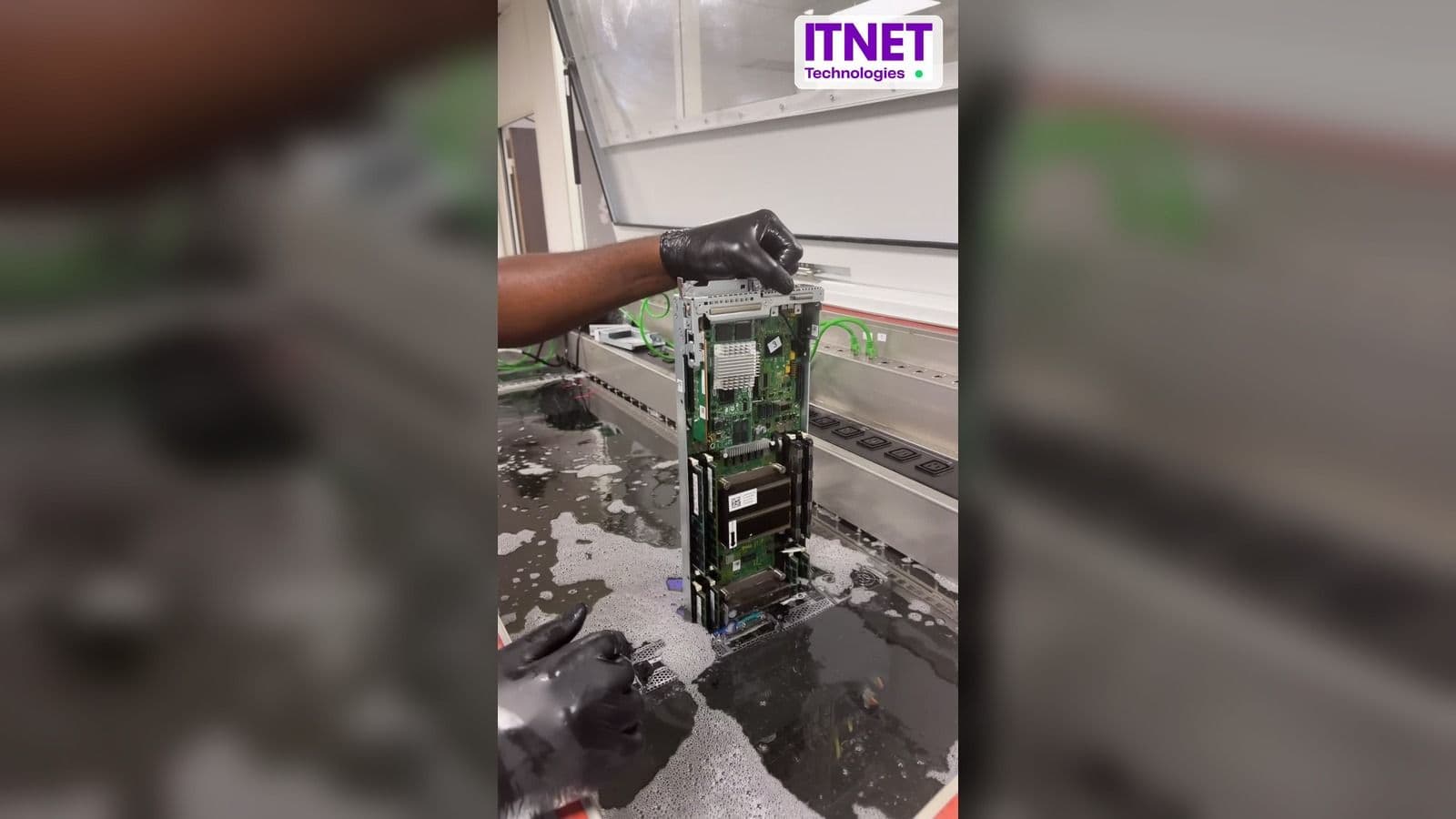
The areas to inspect include motherboards, GPUs, NICs, power supplies, backplanes, internal cables, storage, labels, adhesives, plastic retainers and any component added after purchase. The risk is not only electrical. It is chemical, mechanical, thermal and operational.
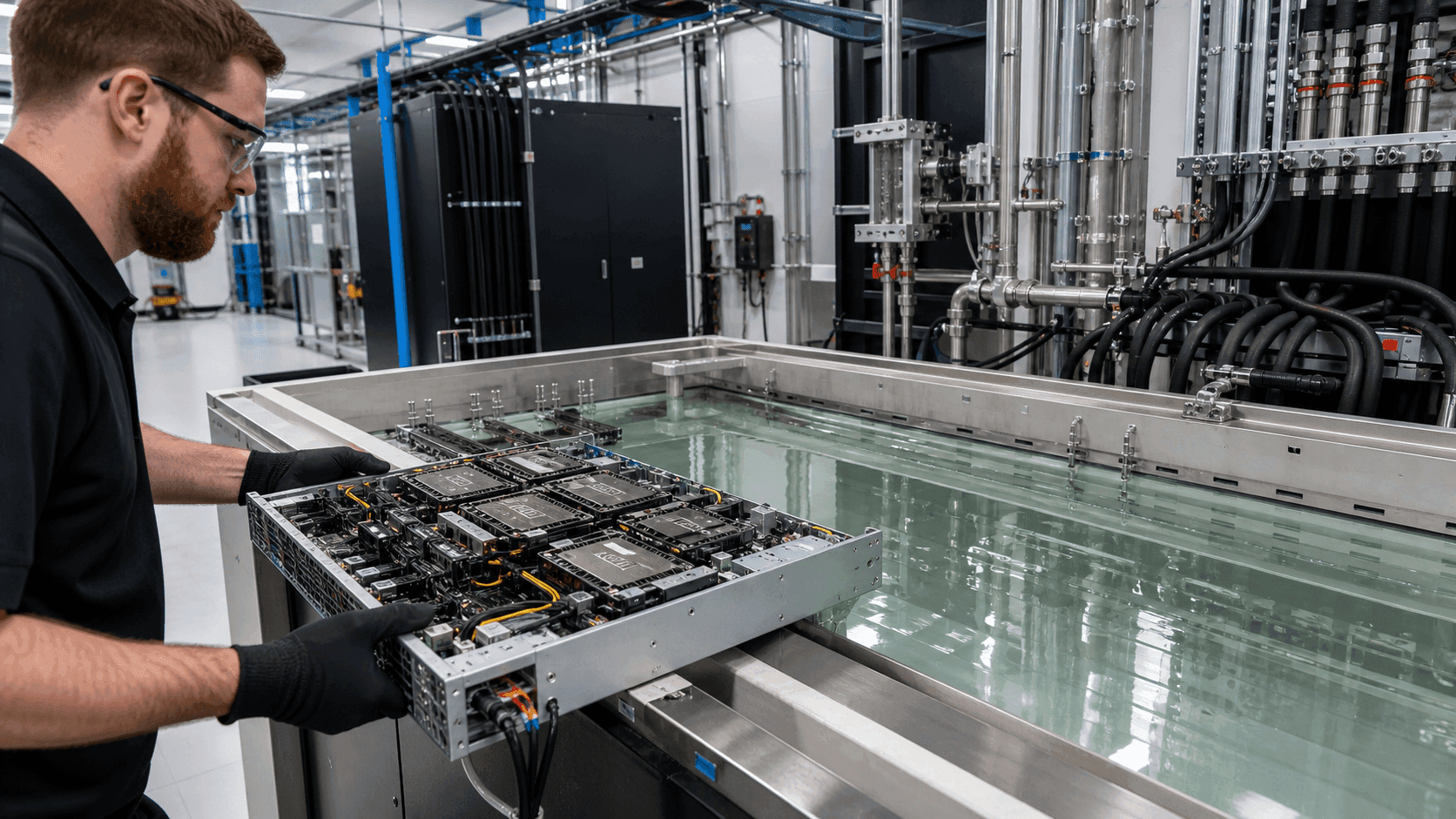
A compatible server must also remain serviceable. Teams need to identify it, remove it, drain it, replace a card, reconnect cables and record the intervention without turning every maintenance step into a special project.
GPU And AI Servers Need Stricter Qualification
AI servers concentrate heat and value in a small space. A GPU server can be acceptable in an air-cooled room at one density and become difficult to operate when density rises. Immersion cooling addresses this by bringing heat extraction closer to the components, but it demands stronger discipline.
The key metric is stability. The goal is not only lower average temperature. The goal is sustained performance, fewer throttling events, protected accelerators, clear maintenance and measurable useful capacity. GPUs, high-speed NICs, power supplies and storage must be validated together.
Before selecting a server, readers should request evidence: immersion references, compatible fluids, test duration, test temperature, acceptance criteria, warranty policy, maintenance procedure and known limitations. A vague "immersion ready" statement is not enough.
Storage, Fans And Moving Parts
SSDs are generally better suited than mechanical drives in dense modern platforms, but they still require material, connector and temperature validation. Hard drives raise additional questions around vents, vibration, mechanical behavior, maintenance and warranty.
Moving parts deserve caution. Fans may be removed, disabled or kept depending on server logic and firmware behavior. The modification must be documented. Removing fans without understanding firmware dependencies can trigger alerts, power limits or confusing monitoring states.
Compatibility includes software and operations. A server that constantly reports fan failures because it was not properly adapted may still run, but it creates operational noise and weakens monitoring quality.
Connectors, Cables And Labels
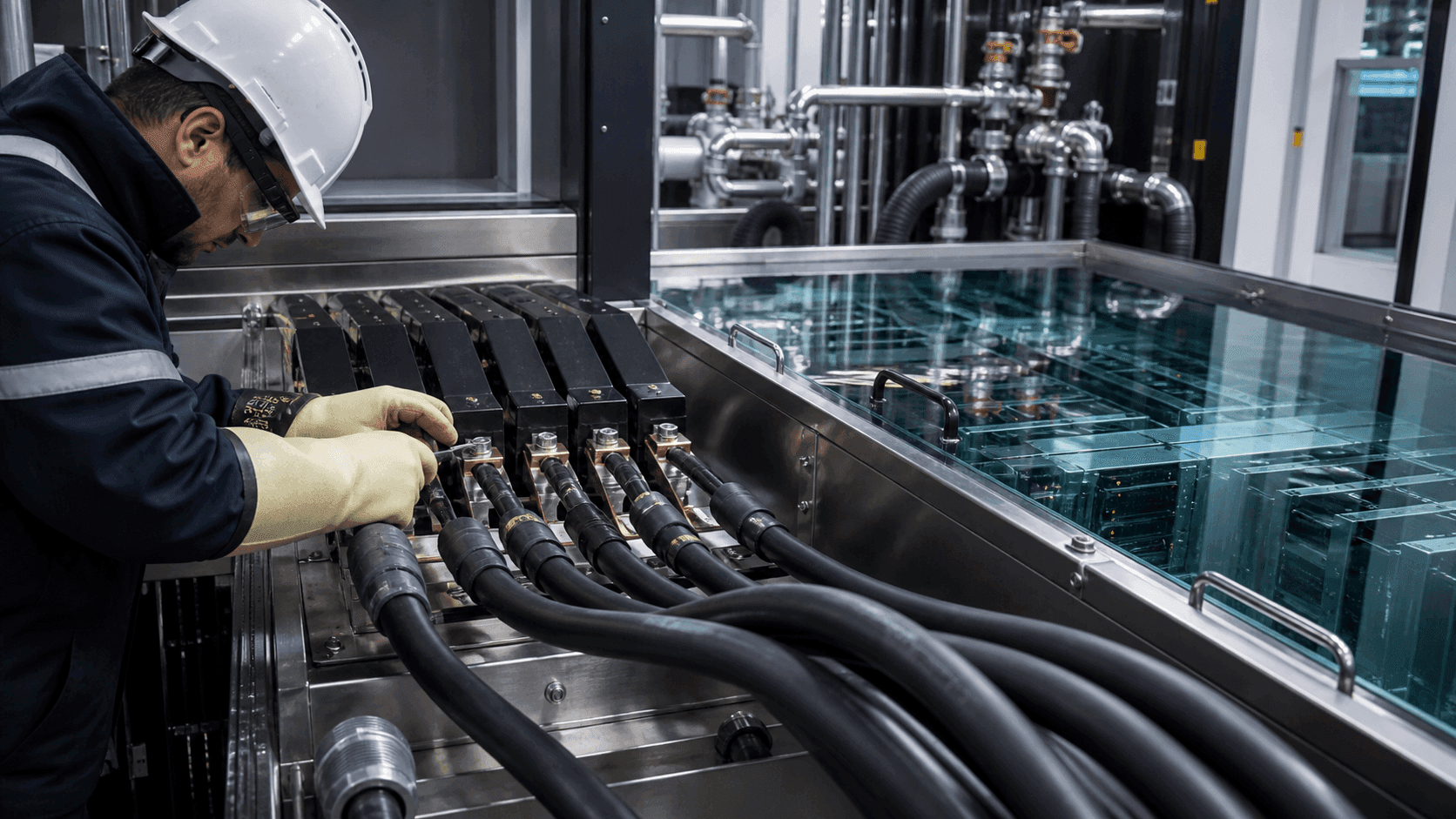
Internal cables and connectors are often underestimated. Jackets, sleeves, labels and adhesives can react to fluid. Some materials look acceptable during short exposure but become uncertain after long-term operation.
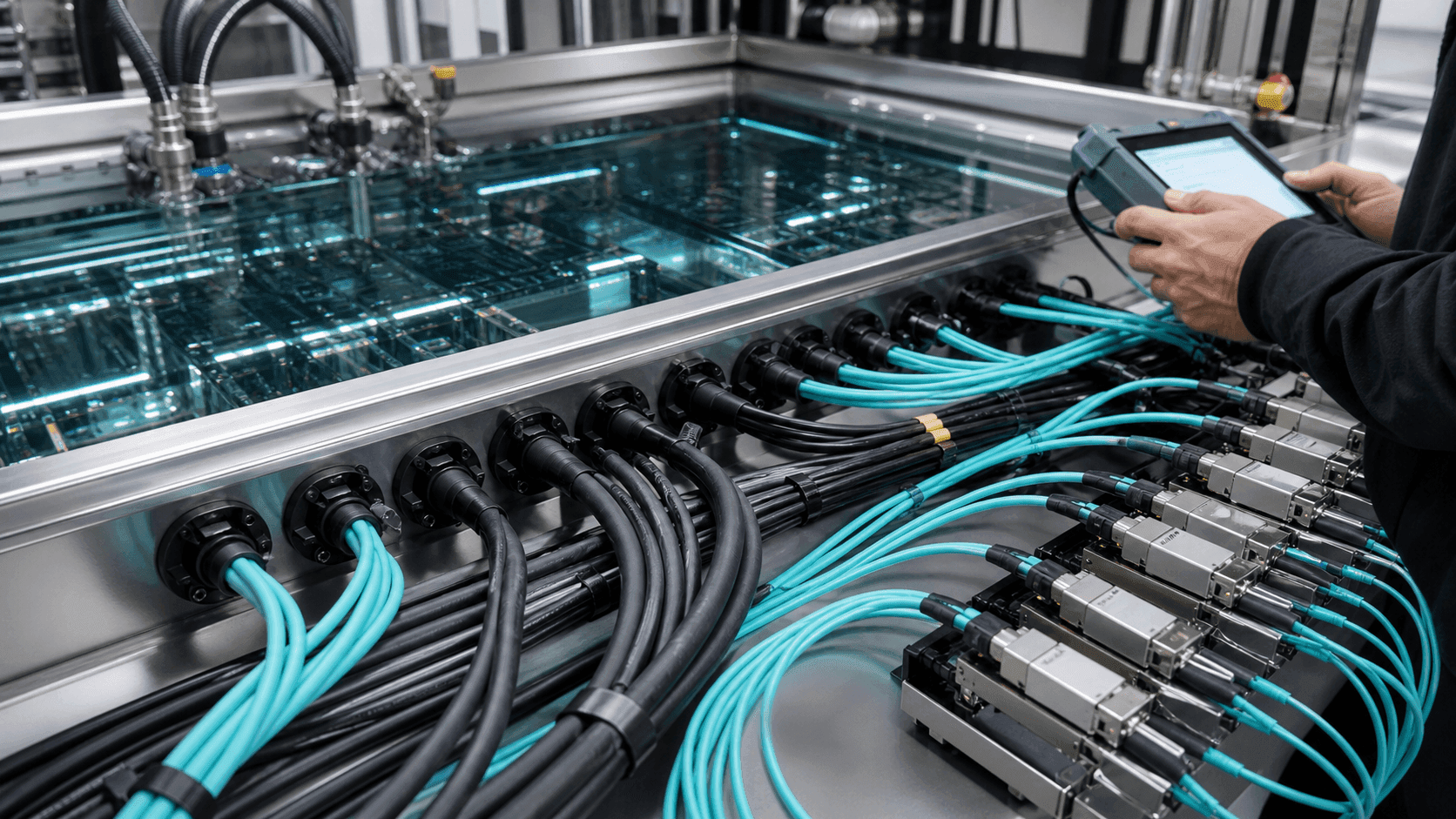
Recent OCP specifications for immersion active optical cables emphasize two requirements: material compatibility with the fluid and performance equal to or better than operation outside the fluid. The same reasoning applies to server-side cabling, power leads and labels. A datacenter where identifiers detach or become unreadable quickly loses maintainability.
Warranty Must Be Clarified Before Deployment
A server can run in immersion and still lose warranty coverage. This must be resolved before purchase. Readers should obtain written confirmation covering the full server, motherboard, GPUs, memory, power supplies, storage, connectors, fluid residue handling and return procedures.
Warranty often depends on the fluid, tank, preparation procedure and maintenance process. A serious project documents the full chain: server supplier, integrator, fluid supplier, operator, maintenance procedure and intervention log.
Practical Acceptance Checklist
A useful checklist starts with clear questions. Has the server been validated in immersion by the manufacturer or integrator? Is the fluid identified by product name and technical sheet? Have sensitive materials been tested? Are fans removed, disabled or monitored in a supported way? Are network and power cables compatible? Are SSDs, NICs and GPUs covered? Does monitoring remain clean?
Operational readiness matters too. How is the server lifted? Where does it drain? How is contamination avoided? How are connectors cleaned? How is the intervention recorded? A compatible platform is a platform that a real team can maintain repeatedly.
Mistakes To Avoid
The first mistake is assuming dielectric fluid guarantees compatibility. Electrical insulation prevents immediate short circuits in normal conditions; it does not validate materials.
The second mistake is qualifying the server but forgetting the ecosystem: cables, optics, power connectors, PDU, labels, sensors and procedures.
The third mistake is treating immersion as a local exception. In a modern datacenter, it becomes an operating model. Procurement, monitoring, cybersecurity, documentation and contracts must follow.
What Matters Most
An immersion-compatible server is a validated system, not an isolated object. Compatibility depends on the fluid, materials, accessories, warranty, monitoring and maintenance gestures.
For readers preparing high-density cloud or AI infrastructure, the right reflex is to demand evidence, not promises. A successful project starts with hardware qualification and then expands to power, networking, cooling, security and daily operations.
FAQ
Can any server be immersed?
Not responsibly without qualification. Some servers can operate after adaptation, but long-term compatibility depends on materials, fluid, warranty and operating procedure.
Should fans be removed?
Often, but not always in the same way. The decision depends on server design, firmware, tank system and supplier recommendations.
Which components should be checked first?
GPUs, NICs, power supplies, cables, connectors, SSDs, labels, adhesives, plastics, seals and anything added after delivery.
Sources
- Open Compute Project, Design Guidelines for Immersion-Cooled IT Equipment: https://www.opencompute.org/documents/design-guidelines-for-immersion-cooled-it-equipment-revision-1-01-pdf
- Open Compute Project, 100G QSFP28 LR4 OCP Immersion Active Optical Cable specification: https://www.opencompute.org/documents/100g-qsfp28-lr4-ocp-immersion-active-optical-cable-v0-1-pdf
- ASHRAE TC 9.9, Mission Critical Facilities and Datacom guidance: https://tpc.ashrae.org/?cmtKey=fd4a4ee6-96a3-4f61-8b85-43418dfa988d
- Molex, Data Center Evolution: ORV3 Immersion Cooling Insights: https://www.molex.com/en-us/blog/orv-immersion-cooling-insights