


Search intent: understand how to allocate AI datacenter power capacity in immersion cooling without sacrificing continuity, security or evidence.
AI datacenter: allocating power capacity with immersion cooling
infrastructure directors, datacenter teams, cloud architects and IT finance leaders are no longer looking only for a promise of power or availability. They want to know how an AI datacenter constrained by power availability and GPU density remains controllable when load rises, when privileged access is challenged or when a restore has to be launched under pressure. The answer does not live in one tool. It depends on a clear chain across architecture, operations, cybersecurity, physical capacity and evidence.
In that chain, Voltaneum is relevant for private dense GPU capacity, Wayhost supports VPS bastions, monitoring probes and backup relays, and ITNET Technologies connects cloud, datacenter and security choices into a coherent operating model. The goal is not to stack offers. The goal is to make every decision verifiable when the incident arrives.
Why this matters now
AI workloads, sovereignty expectations and continuity obligations are converging. A platform can be fast in normal conditions and still be fragile if access, backups, thermal margin and logs are not aligned. Technical leaders therefore need to move from declared capacity to capacity that is proven, maintainable and recoverable.
The regulatory and operational context reinforces that need. NIS2 emphasizes governance and risk management, the NIST Cybersecurity Framework 2.0 helps structure cybersecurity outcomes, and industry reports show rising pressure on AI-driven datacenters. For an AI datacenter constrained by power availability and GPU density, these references matter only when they become short, tested and assigned procedures.
The operating shift
The practical shift is treating available power as a governed production resource rather than a simple technical ceiling. That sentence looks simple, but it changes how operations are managed. A dashboard is not enough if it triggers no action. A procedure is not enough if it has never been rehearsed. A backup is not enough if nobody knows its restore delay.
This approach gives more weight to evidence produced every day. Useful evidence shows who acted, on which resource, with what outcome and within which physical limit. It can be reviewed by operations, security and leadership without a full investigation. That readability separates premium infrastructure from infrastructure that is merely documented.
Target architecture
The target architecture combines power distribution per tank, CDU loops, energy observability, fiber network, storage, administration bastions and failover scenarios. Each component needs an owner, a threshold, a log and a procedure for returning to a known state. Coherence matters more than the number of building blocks because incidents often expose forgotten dependencies across access, network, storage, cooling and backup.
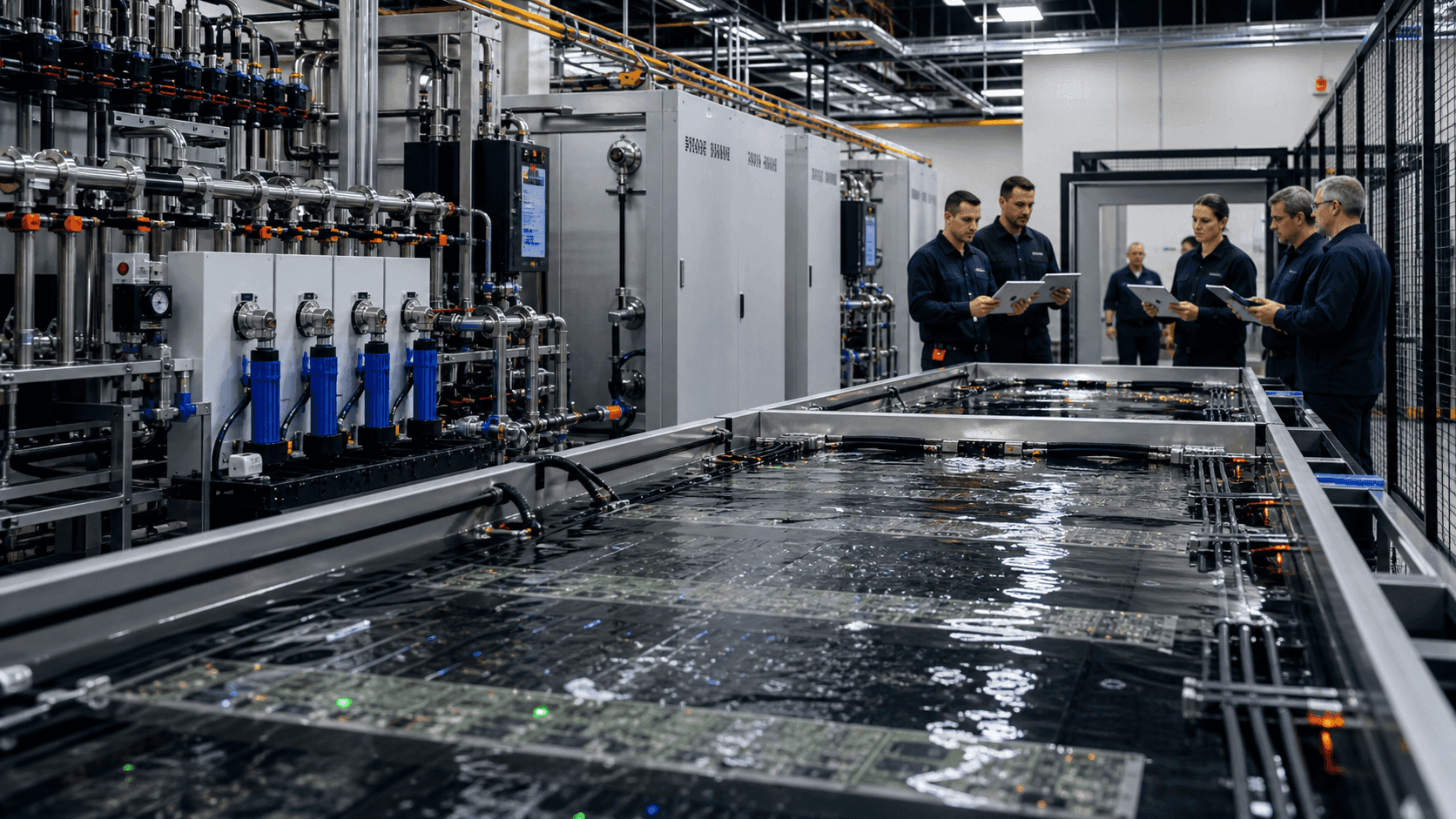
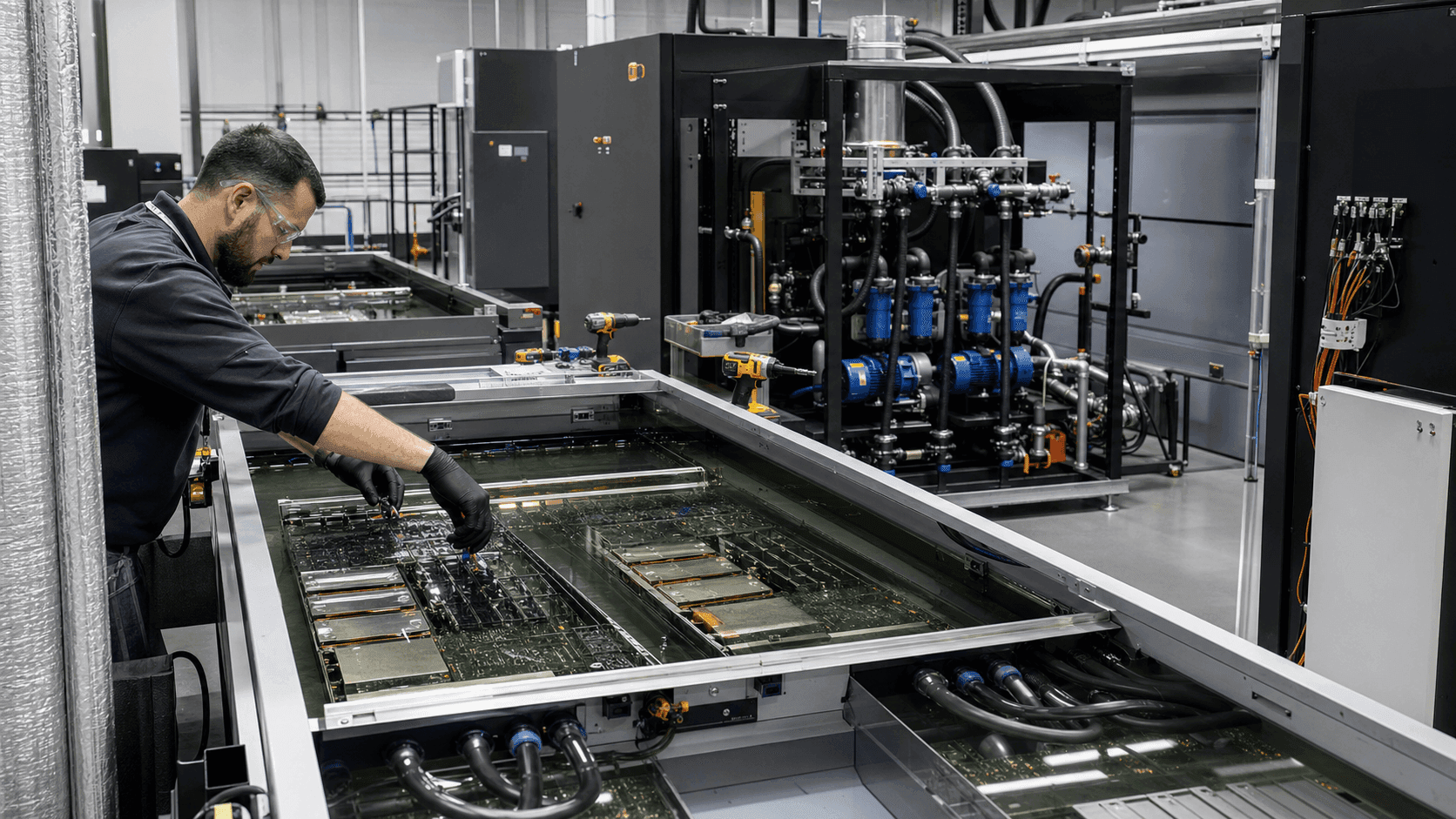
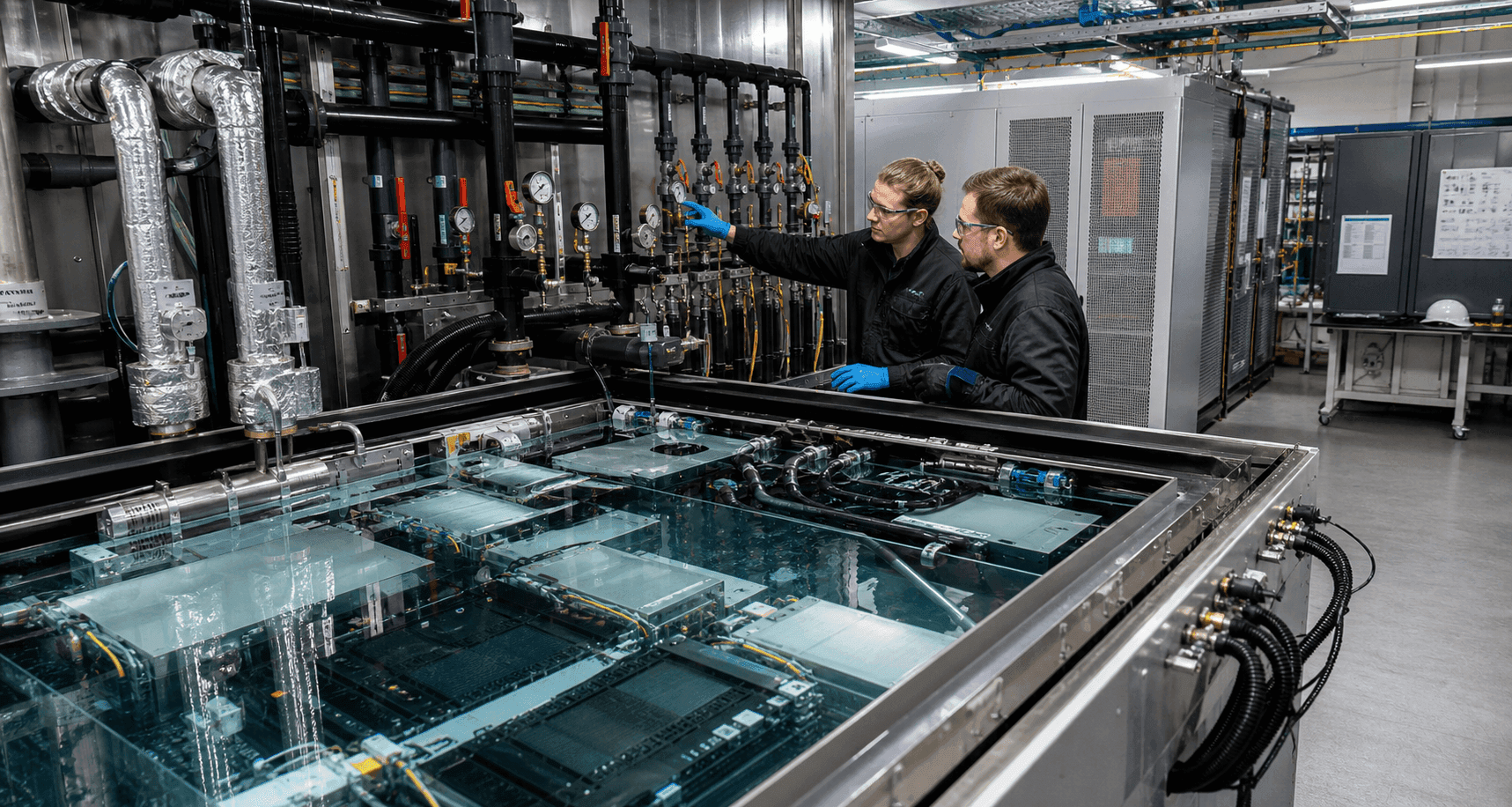
Immersion cooling must be treated as an operating layer, not only as a facility topic. Tanks, dielectric fluid, CDU units, manifolds, fiber and sensors directly condition deliverable capacity. Those signals belong in risk reviews alongside access logs, application queues and restore results.
Evidence model
The evidence model starts with a few simple artifacts: last successful restore, privileged access state, reference image version, available physical margin, approved outbound flows and decisions made during the exercise. These proofs must be short, timestamped and usable, otherwise they become an archive nobody reads during a crisis.
Evidence must also remain natural inside the workflow. A team should not build a compliance folder after the fact; it should produce the material as it operates. That discipline makes tradeoffs faster, especially when cloud, VPS, datacenter and cybersecurity teams have to decide together.
Role of immersion cooling
Immersion cooling improves density and thermal stability, but it requires a more integrated view of capacity. A tank can accept more power than a classic rack, yet useful capacity also depends on CDU margin, maintenance, network paths, storage and recovery. Density is valuable only when it remains governed.
For AI workloads, this governance becomes critical. A saturated GPU queue, reduced thermal margin or poorly prepared maintenance window can degrade service before an application alert is obvious. Physical signals should therefore enrich cloud decisions instead of staying isolated in a technical console.
Cloud, VPS and continuity
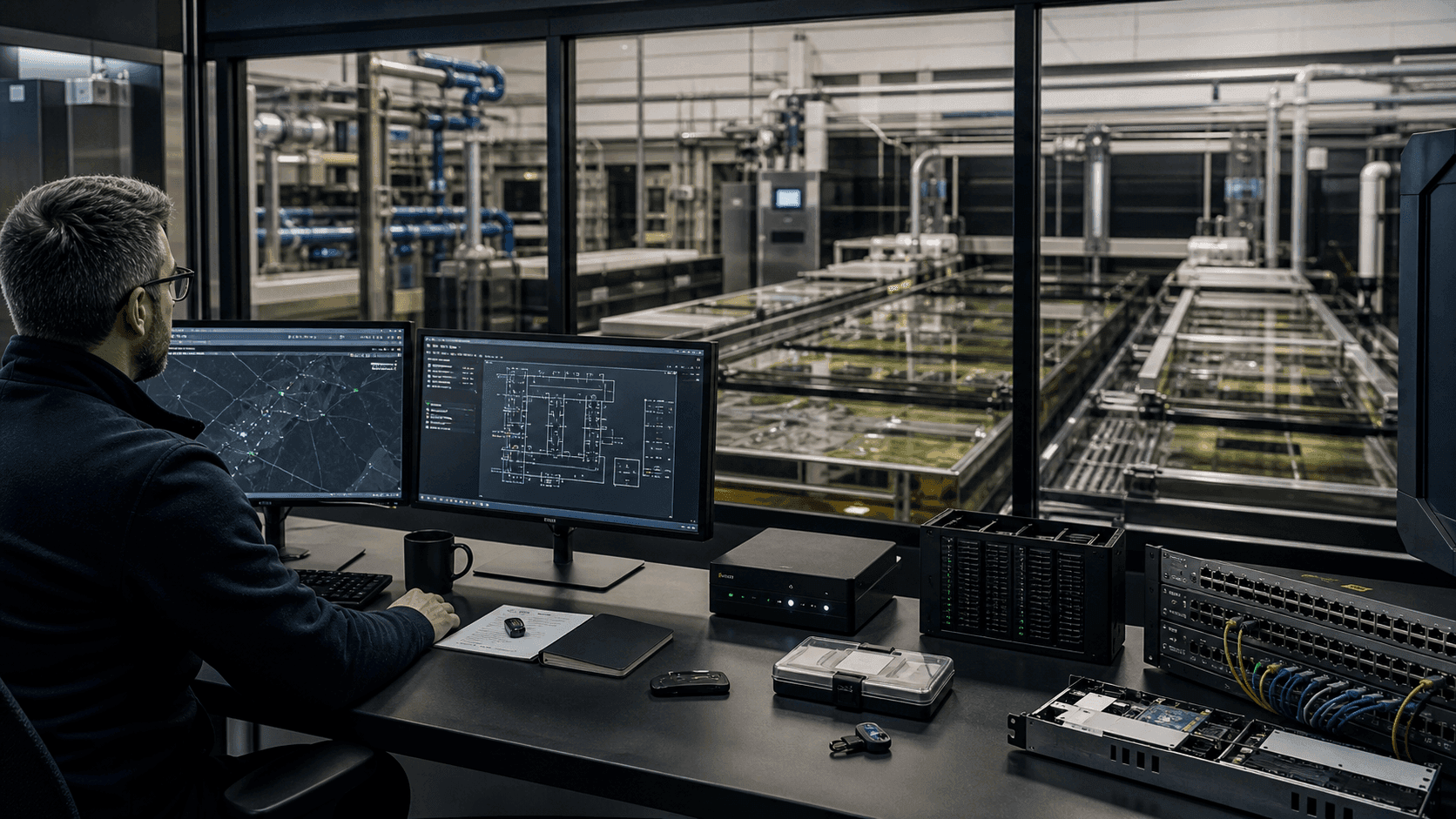
Support VPS services are often more important than they look. A bastion, probe, backup relay or automation repository can decide the speed of recovery. If it is not hardened, logged and recoverable, it becomes a weak point even when the main platform is robust.
Wayhost can support these building blocks when they need to stay simple to operate and quick to restore. ITNET Technologies brings the method for connecting them to access policies, secrets, segmentation and crisis exercises. Sovereign cloud or private GPU cloud then gains a more readable continuity model.
Cybersecurity and risks to avoid
The main risks are densifying without knowing CDU margin, moving a workload without checking network paths, forgetting backups or handling cybersecurity after migration. They are not always visible in conventional indicators. They appear when the team has to isolate a workload, explain access, restore a service or prove that sensitive data stayed within its expected boundary.
The strongest defense is to reduce permanent accounts, enforce MFA, log outside the administered machine, test backups and connect every alert to an action. Cybersecurity then becomes an operating mechanism rather than a layer added at the end of the project.
Practical 90-day plan
During the first 30 days, the team should measure real load, produce a short dependency map and name owners. From day 30 to day 60, it standardizes images, access, logs and physical thresholds. From day 60 to day 90, it runs a realistic scenario involving access loss, restore, capacity saturation and business decision-making.
Each exercise should create a measurable correction. An overly long procedure is shortened, an ambiguous threshold is clarified, unnecessary access is removed, and a slow backup is revised. This cycle strengthens the platform without waiting for a large transformation program.
KPIs to follow
Priority indicators are usable kW per tank, thermal margin, operational PUE, useful GPU occupancy, network latency, access incidents and maintenance duration. They must be tied to thresholds and actions. A KPI that triggers nothing only records delay. A KPI connected to a runbook accelerates decisions and reduces unnecessary debate during a critical window.
These indicators become more valuable when correlated. An access incident may explain an automation outage. Low CDU margin may warn of capacity reduction. An old restore test may reveal a forgotten dependency. Maturity means reading these signals together.
What matters most
Infrastructure quality is no longer measured only by installed power. It is measured by the ability to return to a known state, explain decisions and prove that controls work under pressure. For an AI datacenter constrained by power availability and GPU density, this requires an architecture that connects technical layers instead of isolating them.
The best starting point is pragmatic: a few strong proofs, rehearsed restores, controlled access, visible physical margin and named responsibilities. That is how Voltaneum, Wayhost and ITNET Technologies can be integrated into a coherent path across cloud, datacenter, VPS, immersion cooling and cybersecurity.
FAQ
Is GPU density enough to justify an immersion migration?
No. Density must be compared with power margin, CDU capacity, network readiness, backup posture and maintenance procedures.
Which KPI should come first?
The best initial KPI is useful capacity per tank, meaning power that can actually be delivered without degrading availability or recovery.
Who should be part of the allocation decision?
Datacenter, cloud, network, security, IT finance and operations teams should decide together because power constraints touch every layer.
Sources
- ENISA, Threat Landscape 2025: https://www.enisa.europa.eu/publications/enisa-threat-landscape-2025
- NIST, Cybersecurity Framework 2.0: https://www.nist.gov/cyberframework
- European Commission, NIS2 Directive: https://digital-strategy.ec.europa.eu/en/policies/nis2-directive
- Uptime Institute, Global Data Center Survey Results 2025: https://uptimeinstitute.com/resources/research-and-reports/uptime-institute-global-data-center-survey-results-2025